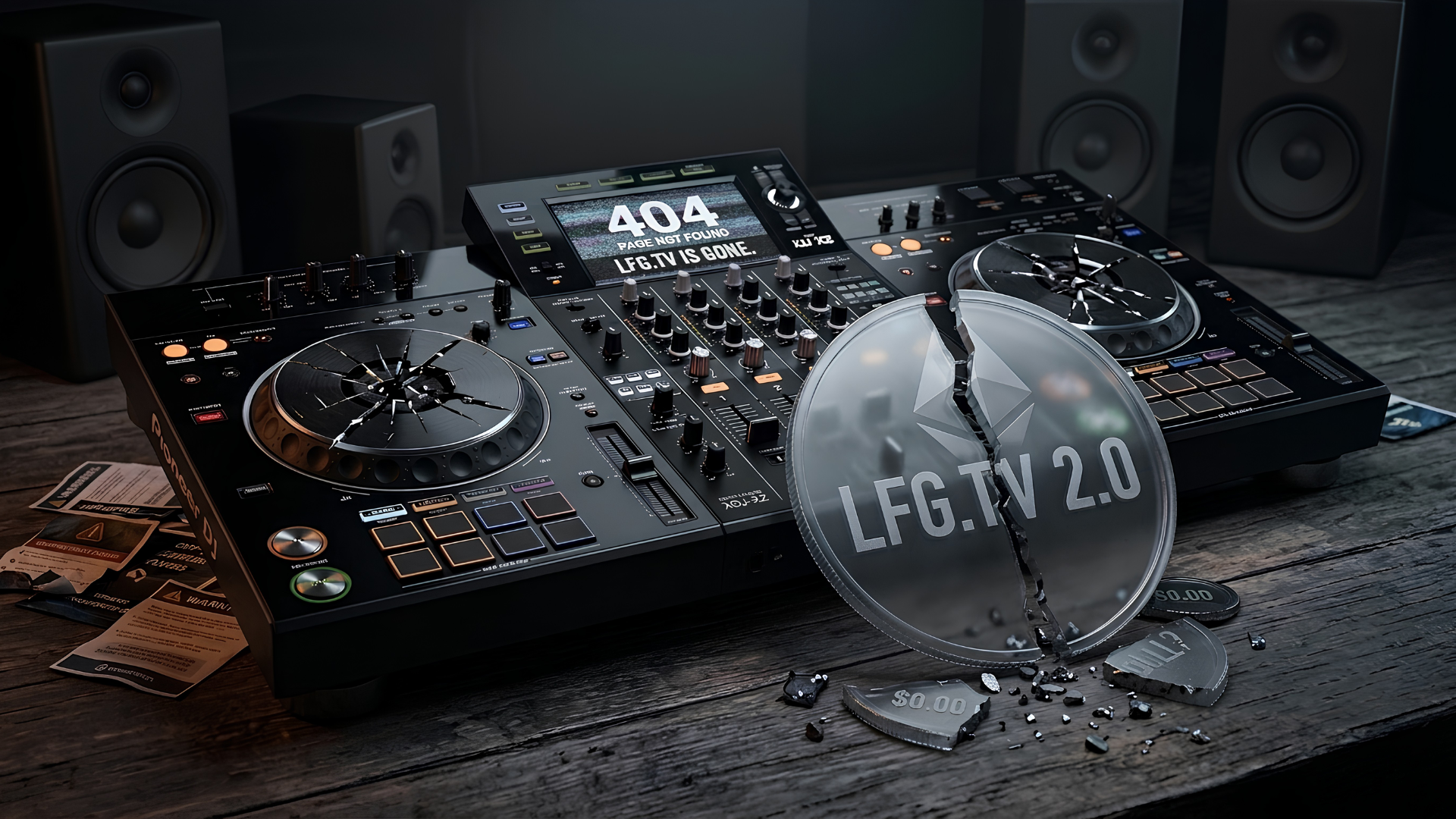
LFG.TV launched in August 2025 with a pitch the DJ community had been waiting years to hear. A platform built specifically for DJs. No copyright takedowns. No gaming streams clogging up your feed. No Twitch nonsense. Just DJs, music, and the fans who love it. They had real industry names behind them too. Beatport, Technics, Algoriddim. On paper it looked legit.
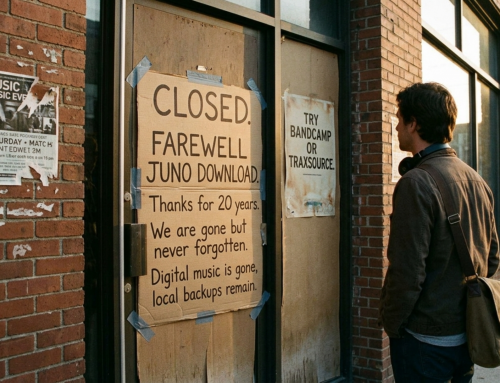
By November 1st, 2025, barely 60 days after going live, the site went dark. The official statement called it a strategic reset to build LFG.TV 2.0. We’ll let you decide what that means.
The influencer push that quietly disappeared
Grahame Farmer, the founder of Data Transmission and one of the most credible voices in DJ media, was putting his name behind LFG.TV in a big way. Dedicated videos. Real enthusiasm. The kind of content that carries weight because of what Grahame has built over 17 years in this industry. DJs trust him. His audience listens.
Those videos are gone now. Scrubbed from his channel with no explanation, no follow up, no acknowledgment. When someone with that level of reputation quietly deletes content, that’s not a technical glitch. That’s a deliberate decision. And decisions like that tell you something.
The LFG coin nobody asked about
Here’s where it gets sus. LFG.TV had its own cryptocurrency. A proprietary token running on Ethereum with a total supply of one billion coins, marketed as a way to tip DJs and unlock platform rewards. Sounds cool right? The problem is that platforms like Stripe handle tipping just fine without inventing a new currency. The only real reason to create your own coin is if the coin itself is part of how you make money.
CoinMarketCap flagged the smart contract with a warning that the creator could disable selling, change fees, or mint new tokens at any time. That’s not a minor footnote. That’s a major red flag. Today the coin trades at fractions of a cent with zero volume. Effectively worthless. Anyone who bought in is holding nothing.
We’re not calling it a rug pull. We’re just saying the pattern looks familiar.
The math that was never going to work
Reports put the initial build cost around $500,000. That gets you a platform. What it doesn’t cover is keeping the lights on. Live video streaming infrastructure at any real scale runs between $50,000 and $100,000 per month in transcoding, CDN, bandwidth, and server costs alone. Before you pay a single employee. Before licensing. Before marketing.
And the licensing piece is where the whole thing really falls apart. The entire value proposition of LFG.TV was solving the DMCA copyright problem that makes streaming hell for DJs. Doing that the right way means cutting deals with the major labels, Universal, Sony and Warner, on top of the performing rights organizations like ASCAP, BMI, SESAC, and the PRS. We’re not talking about a few thousand dollars here. For a streaming platform seeking full catalog access, licensing costs can exceed the entire development budget by a factor of ten or more. Spotify paid the major labels massive advances just to get in the door, and that was with hundreds of millions in venture capital behind them. LFG.TV raised $500,000. There’s no public evidence they ever got close to the licensing agreements needed to deliver on their core promise.
Wait, Mixcloud already solved this problem
This is the part that really gets us. LFG.TV kept saying there was no platform out there solving the DJ streaming copyright problem. That claim wasn’t accurate. Mixcloud has been doing exactly that since 2008.
Mixcloud launched live streaming back in April 2020 and has direct licensing deals with Universal Music Group, Sony, Warner Music Group, and over 250 independent labels through the Merlin organization. They also have agreements with ASCAP, BMI, SESAC, and the PRS on the publishing side. When you stream on Mixcloud, the artists whose music you play actually get paid. There are no takedowns. No mutes. No strikes.
Mixcloud Pro runs around $15 a month and gets you unlimited uploads, live streaming, and full copyright clearance. No proprietary coin required. No vague promises about 2.0. Just a working platform that’s been doing what LFG.TV claimed to be pioneering, for years before LFG.TV existed.
Either the people behind LFG.TV didn’t do basic market research, or they were counting on the DJ community not knowing Mixcloud existed. Neither answer looks good.
The pivot that confirmed it
Less than 45 days after launch, LFG.TV was already polling its community about whether the platform should open up to all streamers beyond DJs. That’s not community engagement. That’s a sign the numbers weren’t working and someone was looking for a way to broaden the audience fast enough to justify the burn rate. The DJ community that had bought into the platform on the strength of the DJ only promise felt played. Creators started walking. The goodwill was gone almost as fast as it arrived.
What to watch for next time
LFG.TV 2.0 has been promised. We’ll believe it when we see it. But the bigger issue is what happens the next time a platform shows up with the same playbook. Built for DJs. We solved copyright. Here are your industry co-signs. Sign up early and here’s a coin.
The DJ community deserves a real solution to the streaming problem. LFG.TV knew that and leaned into it hard. Whether the intentions were solid and the execution just fell apart, or whether this was structured to extract money from a passionate community, the result is the same. DJs got burned. Influencers went quiet. A coin that was supposed to empower creators is essentially worthless. And a platform that was supposed to be built for us lasted about as long as a free trial.
Next time someone comes to you with a DJ streaming platform and their own currency, ask the hard questions first. And maybe just check if Mixcloud already does it.